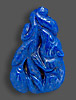
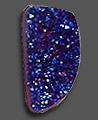
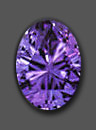
We work with a variety of gems here at Joseph Schubach Jewelers. Today, I’d like to highlight some of the breathtakingly beautiful blue stones. Many people will think of sapphire or lapis or even tanzanite, but there are a number of other blue gemstones which come in different shades including azure, cobalt, navy and indigo.
Lapiz Lazuli
Rainbow Hermatite
Titanium Drusy
London Blue Topaz
Blue Moonstone
Tanzanite
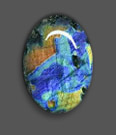
Spectrolite
Boulder Opal
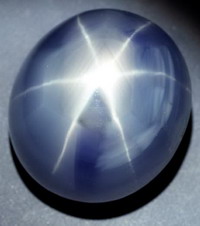
The “Star of Lanka” is a 193-carat, oval, cabochon-cut, high domed, blue star sapphire with a distinct six-rayed star positioned at the center of the dome-shaped face, with its arms extending down to the base of the stone. In terms of the quality of the star, the “Star of Lanka” rivals its more famous cousins such as the “Star of India” and the “Star of Bombay.” The stone is opaque and milky, which tends to reduce the tone of the blue color of the sapphire. The color of the sapphire is a grayish blue. The dimensions of the gemstone are 30mm x 27mm x 23 mm.
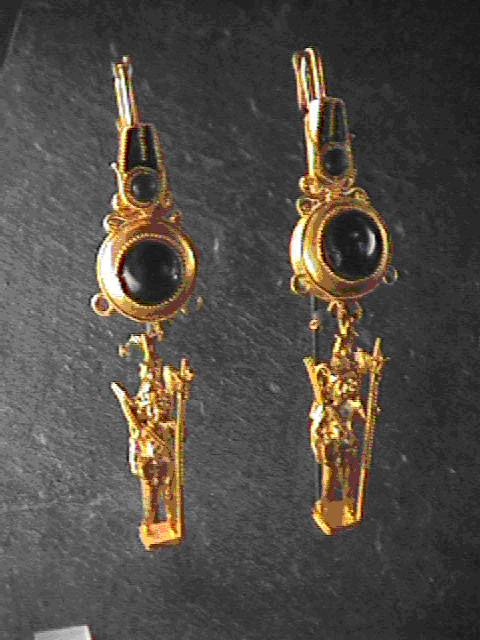
Take a look at these amazing (and ancient) pieces of jewelry from the Middle East.
Every artifact serves as a symbol of information. Apotropeic emblems, borrowed from everyday life, epos, or myths, and used in the art of jewelry making, carried a certain magical connotation. Popularity of a particular mythological plot line was connected to the very zeitgeist of the given time period, since the jewelry maker lived through it and tended to be deeply involved with the contemporary events. The art reflected the master’s interests in what was currently happening with the society.
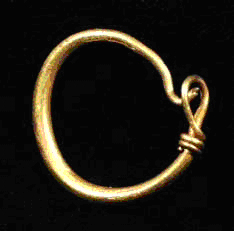
The simple-style earrings- as a ring, can be dated precisely by using radioisotope analysis, especially consider the items’ popularity. Earrings of that type are well-known from the images of the Achaemenian era (guards of Persepolis wore a single earring similar to the one in our collection; today youths and young men prefer this type as well). Earrings of this type were produced by casting method followed by polishing.
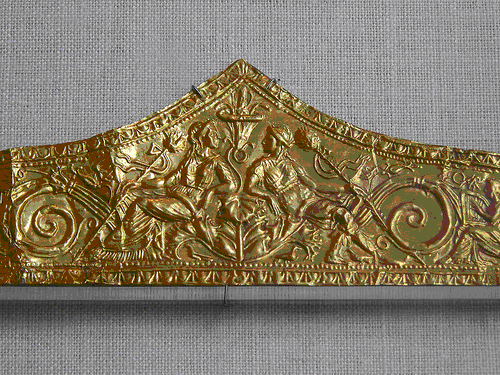
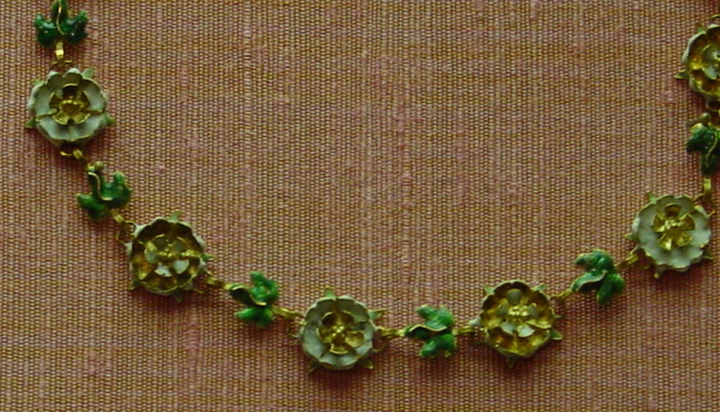
It is known that diadems were a special sign of a god or royalty. Gold garlands were kept in temples as parts of gold funds and were given as rewards for special achievements. Fragments of diadems were found among the finds of Oxus (see Treasure of Oxus, Dalton, London, 1964), and Tillya-tepe (Bactrian gold, Leningrad, 1985). Characters crowned by similar head jewelry can be found on coins, intaglios, pottery, paintings, frescos and reliefs, which allow us to recognize them as royalty or god-like creatures. Most of diadems were gold. Sometimes they are made by the stamping method. Details and fragments of diadems are made in the shape of leaves, trefoils or rosettes.
Gold earrings, from Jerusalem, represent a miniature nude male figure stamped in thin sheet gold. Each is bent into shape of ring and soldered to the hoop, together forming an earring. The man is wearing a wide headband, which fastens the top of the figure to the hoop. A miniature disk, in the shape of an eight-petal led rosette adorned with granulation, is soldered to the hoop above the figure's head.
Neck adornments were mostly worn by members of high social standing; perhaps this is the reason that the museum collection does not have a lot of samples of neck ornaments.
At Joseph Schubach Jewelers, we are concerned about eco-consciousness. That’s why we use diamond alternatives, like moissanite. And we all use recycled materials in our jewelry making.
But there are some actions you can take with your old jewelry to give it a new look. Take a look at these interesting suggestions. And blow the dust off that old jewelry box of yours!
Sell Your Old Jewelry Pieces on EBay or Etsy
You can list old jewelry for sale on eBay as pieces of jewelry, or as jewelry parts that can sell as components to create new pieces. Old jewels are popular sellers among jewelry makers for the parts, so don’t hesitate to add orphan earrings or broken jewelry to the lots.
Etsy is another website where you can sell your jewelry parts or your vintage jewelry. Visit a number of Etsy storefronts to get an idea of what is selling and at what price. To sell your items, you will then need to open up your own “store”.
Donate Your Old Jewelry To CharityUnwanted jewelry can be put to good use by various charities. If a favourite charity of yours is holding an auction, donate your old and unused jewelry so the charity can make a little money. You might even be able to ask for a tax receipt.
Use Jewelry in Unexpected Ways
If your brooches or earrings are missing bits, you can still recycle them as gift toppers and add a bit of bling to perhaps a ho-hum gift. It’s fun and eco-friendly and your recipient is getting two gifts in one.
Decorate a picture frame, lampshade, plain box–the options are endless. Practice making a pattern before gluing the jewels to their new home.
Dress up pretty bottles with beribboned brooches or earrings. Fill the jars with bath foam and oil for a jewel-charmed gift.
If you have old clip-on earrings you will never wear, clip them on as shoe clips to glamorize a pair of plain high heels.
Wrap unused gold or silver chain necklace around your wrist several times and wear it as a multi-strand bracelet.
Or combine that plain chain with an unused charm bracelet to create an unusual and original combination. If you have single charms in your jewelry box, you can simply slip one or two onto the chain necklace for a fresh look
For a stunning new look, slip a few of your unused rings on to a kilt pin (those large safety pins used to hold kilts together) and create a one of a kind brooch instantly.
Platinum is hot…but was it ever not? Known for its rarity, purity and durability, platinum is the perfect choice to represent ever-lasting love. Here are some recent bridal ring trends that use this classic metal:
Color
From ever-popular sapphire to trendy “champagne” and “cognac” hues and rare pinks and yellows, colored diamonds and precious gemstones continue to be bridal favorites among ladies seeking a little something different.
Above: Fusaro engraved wedding band in platinum with diamonds and sapphires; suggested retail price is $4,600. (800) 258-0385 or FusaroJewelry.com
Above: Yves Frey oval-shaped yellow diamond ring with two kite-shaped side stone diamonds flanked by small brilliant-cut diamonds and six small yellow diamonds.
Vintage-style
Brides continue to show a penchant for new rings that don’t look quite so new. To help them tap into the vintage-style bridal trend, point out platinum designs with milgrain detail, engraving and halo settings.
Above Left: Beaudry “Boutique Colisee” semi-mount ring in platinum for 0.90-carat round brilliant center stone.
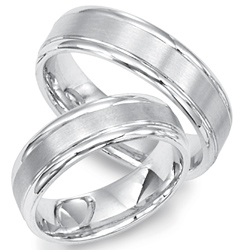
Above Right: Kirk Kara platinum and diamond wedding band for her from the “Charlotte Collection” and platinum satin-finish wedding band for him from the “Artin Collection;” suggested retail prices are $4,160 and $5,220, respectively.
Entry-level
Platinum bridal designs at entry levels have been making further entree into the market as designers continue to cater to cost-conscious yet value-seeking consumers via platinum pieces with lighter diamond weights and less metal.
Above Left: True Knots 6-millimeter brushed-finish wedding band for him and 5-millimeter brushed-finish wedding band for her; suggested retail price is $1,500 for the men’s ring and $1,000 for the ladies ring.
Above Right: Ostbye ladies engagement ring in platinum; suggested retail price for semi-mount is $2,186.
Floral
Floral motifs have been blooming in bridal designs, with jewelry artisans finding newfound inspiration in the beauty of nature. Ever romantic and supremely feminine, intricately detailed floral designs fit right in with the trend for antique-style jewelry.
Above Left: Saturn Jewels platinum semi-mount engagement ring with 0.50 carats of diamonds and wedding band with 0.52 carats of diamonds.
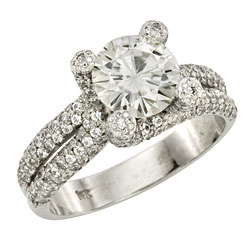
Above Right: Ritani floral design engagement ring in platinum with round center stone supported above micropave diamond-encrusted petals and micropave diamonds on the mounting. The ring features a graduated diamond shank with two rows of micropave diamonds.
And remember, we specialize in designing rings just like ones above for a fraction of the price (but the quality and craftsmanship remain firmly in place!)
Right now, our Design it Yourself contest is officially ON – you tell us about the piece of jewelry you’ve dreamed of and we create it, with your budget in mind. If your piece is chosen by our online audience, you save even bigger!
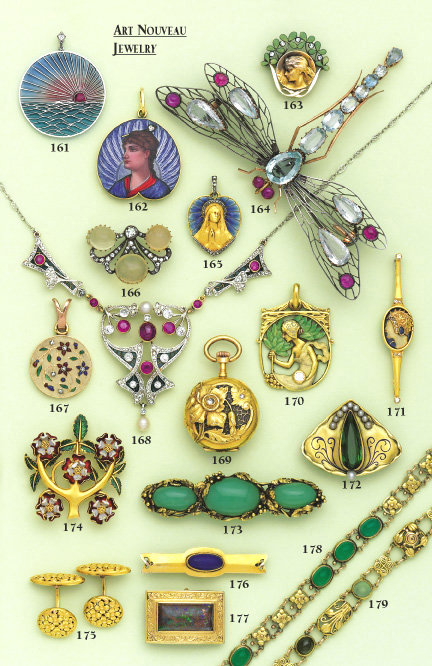
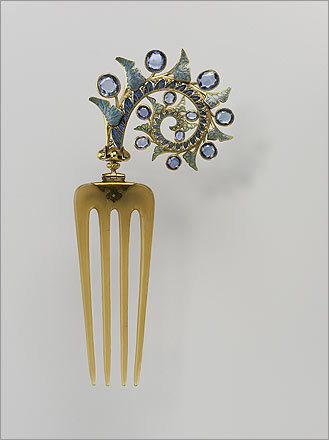
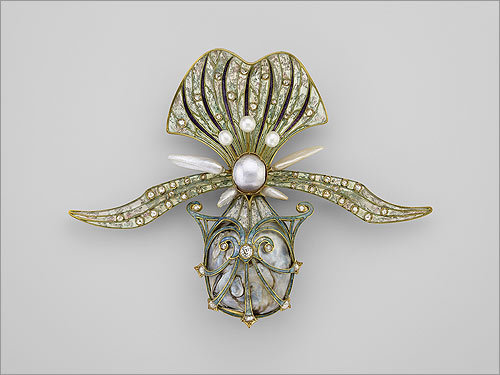
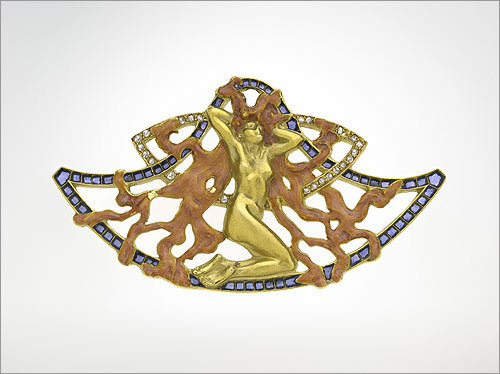
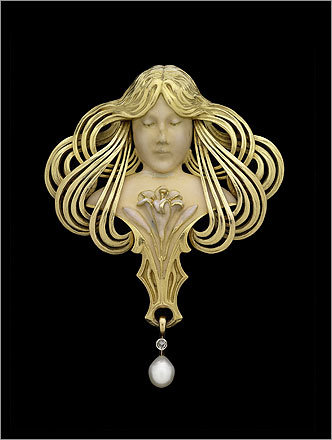
The Art Noveau movement in jewelry, albeit brief, ushered in a tremendous amount of change in the jewelry making process. Suddenly a more expressive, mystical and personal form of adornment became popular.
The Art Nouveau movement, although short lived (approximately 1890 through 1910) made a lasting impact on the jewelry industry which is still felt today. It was a reaction to the mass produced jewelry that had become so popular late in the Victorian period. The style of Art Nouveau jewelry was a radical change from the somberness and adherence to strict rules which characterized both French and English jewellery in the 1860’s and 1870’s. There were few restrictions in the design of Nouveau jewelry.
The most common motifs incorporated life forms, orchids, lilies, irises, ferns, snakes, dragonflies, animal and human forms. Life-like to dream-like simplicity of metal alone to the complexity of enamel and precious gems. The rebellion against the strict customs of the Victorian and Edwardian periods released an incredible out-pouring of creative energy that not only produced pieces of subtle beauty but also touched the sublime and the mystical. No longer would a piece of jewelry be a mere adornment, now it became a part of one’s soul.
We see your back for another Joseph Schubach jewelry lesson. We had a feeling you’d return. So boys and girls, today a quick introduction to Elizabethan jewelry, thanks to the people at Elizabethancostume.net.
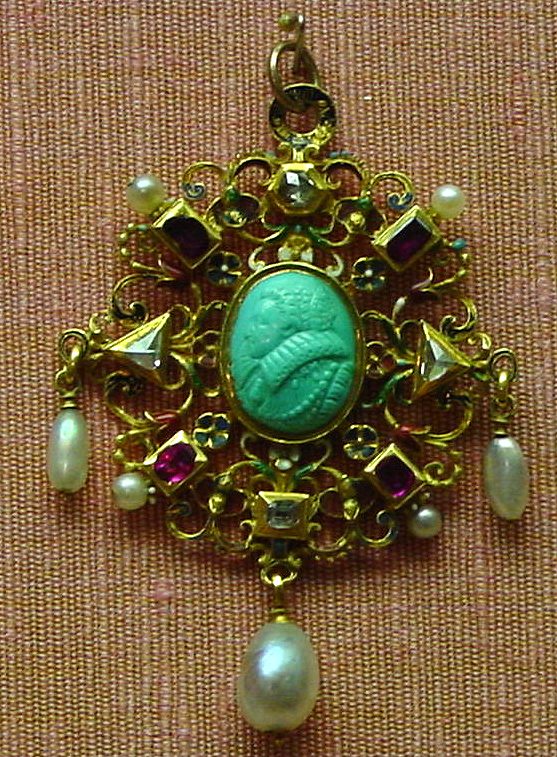
Compared to the complex faceted cuts used on modern gems, the art of gem faceting in the 16th century was quite rudimentary. The common cuts of today’s stones were not in use in the 1500s, which can make finding authentic-looking jewelry difficult. In the 16th century most gems were cabochon cut, with a smooth, rounded top, or table-cut (a cabochon with the top cut off, creating a flat surface.) They were oval or square in shape.
For very hard stones, like diamonds, a pyramid-cut which created a pointed gem was used. Later in the century the hog-back cut was invented (beveling the table-cut gem around the edges to create what we consider the classic “emerald” cut), and around 1600 the rose-cut, which made gems glitter and sparkle more. There was, however, a great deal of complex gem-carving in the 16th century. Cameo carvings were popular, as were semi-precious stones carved into the shape of ships, women, and animals. Gems used in 16th century jewelry included the diamond, ruby, emerald, opal, topaz, and sapphire. Other hard stones, used for beads and cameos, included turquoise (called “Turkey stone”), carnelian, jasper, onyx, bloodstone, moss agate, chalcedony, crysoprase and sardonyx. Freshwater and sea pearls were both used.
In the 16th century, the goldwork of a piece of jewelry was as esteemed as the jewels it surrounded. The modern prong-setting for jewels was rarely seen. In the early 1500s the settings for jewels were often plain gold wrapped around the bottom of the gem, but after 1540 they began to become more and more elaborate, often imitating petals or acanthus leaves, sometimes more impressive then the jewels themselves.
Pearls were also an integral aspect of 16th century jewelry. They could be worn singly, in strands. They could be clustered in twos and fours and combined with goldwork to create elaborate billiments, necklaces or girdles. They could be sewn to clothing singly, set in elaborate goldwork settings, or used to decorate hairstyles. Goldwork, especially goldwork depicting a particular scene or item, was often enameled with colored glass. To moden eyes this tends to look “cheap” in comparison to plain gold and jeweled items, but it was very much to the taste of 16th century women.
It’s happened to the best of: the ring went on so easily, then somehow, it doesn’t want to come off.
First, don’t panic. Fingers swell all the time for many reasons. Sometimes just waiting it out is enough. But if the panic gets the better of you, here are a few tips:
Lather soap all over your finger. Put your finger under warm water. Pull on it until it slips loose.
Envelop your finger from the ring up as tight as you can with clingy plastic food wrap. Grease up the ring and your swollen finger below the clingy wrap. Wait a couple of minutes then pull the ring and the clingy wrap at the same time.
Spray window cleaner on the ring. This works better than lotion because it doesn’t damage the precious stones and leaves the ring shiny when you finally get the ring off your swollen finger.
Wrap tape around your finger just past the ring. Leave the tape on for 30 minutes. Ice your hand while holding it above your heart for another 15 minutes. Take off the tape and spray window cleaner on your finger. Twist the ring around your finger while pulling it off.
Take a piece of thick string and wrap it very tightly down to the ring starting from the top of your finger. Put the end of the string under the ring then pull up slowly working up over the top of the string.
Estate sales can offer some amazing bargains…as well as some incredible pitfalls. Before you hand over your cash, consider these rules:
Identification
Estate jewelry made with real stones may be difficult to spot without the aid of a jeweler. Before you try to sell any of your jewelry, carefully look for any markings that would indicate gold or silver, or the manufacturer’s insignia. Identifying fine jewelry from costume may not be as simple as a quick look. The older the estate pieces, the more difficult this could be. The first rule of selling estate jewelry is to know what you have.
Considerations
Fine estate jewelry should always be appraised before you attempt a sale. Even though your necklace is only worth what someone will pay for it, you should establish a value so you can know what to expect before accepting an offer. Many costume estate jewelry pieces can be found online at auction sales, allowing you to determine an approximate value for these pieces.
Benefits
Another rule for selling your estate jewelry is to explore alternative markets. Selling your jewelry to a local jeweler or pawn broker may seem like a good idea, but you will likely receive a higher price at an auction or a private sale. The benefits of checking your options could translate into more cash in your hands.
Misconceptions
Inherited costume jewelry may have more value than just sentiment. One rule you should follow before selling this type of jewelry is to do your research. Online auctions are filled with vintage costume estate jewelry and the prices for these items may surprise you. Just because the jewelry in granny’s estate isn’t real does not mean that is has no monetary value.
Warning
Before you soak that old bracelet in some kind of cleaning solution, make sure you will do no harm. This rule should be followed for all of your jewelry, not just estate. Properly cleaning your pieces will add value and bring you a higher price. Improperly cleaning could eliminate any chance you have of selling the piece, particularly if it is costume.
Nowadays, choosing a diamond simulant is a smart, viable choice for many. But still, people want to know how you tell the difference between a fake and real diamond. This article covers the basics, for the skeptical and curious:
To understand how to tell a cubic zirconia from a diamond, it is important to have a better understanding of what this particular stone is and why it looks so much like an expensive diamond. Cubic zirconia is a synthetic material made from zirconium dioxide. The material is extremely hard, strong, virtually flawless from a visual perspective, and colorless, although cubic zirconia can be produced in numerous colors.
One of the primary benefits of cubic zirconia is affordability. Obviously, diamonds are expensive, one of the most expensive of all precious stones. For this reason, if people can purchase a material that looks like a real diamond, has strong and durable qualities, and costs a fraction of what a diamond costs, it is easy to see why a cubic zirconia is so popular. However, with all the benefits, nothing can take the place of a diamond. Now understanding what cubic zirconia is, individuals need to know how to tell a cubic zirconia from a diamond.
Again, the main reason for learning how to tell a cubic zirconia from a diamond is to avoid being scammed. If a person were to sell existing jewelry, he or she needs to know without doubt pieces being sold are actually diamonds. Then, for buying, unfortunately it would be easy for someone to become caught up in fraud, spending hard-earned money on a fake stone. While this might sound farfetched, the truth is this happens often.
The good news is that there are a number of easy tests that will help to determine whether a stone is cubic zirconia or diamond. For starters, there is the old method of scratching glass. If a piece of jewelry made with a cubic zirconia were to be run across a piece of glass, nothing would happen to the glass but the faux stone might scratch. However, if a real diamond were run across a piece of glass, the diamond would likely be undamaged and the glass scratched. The only downside to this particular test on how to tell a cubic zirconia from a diamond is that some of the higher quality faux stones are now made so well they can produce a small scratch on the glass.
Another method to tell cubic zirconia from diamond has to do with the stone’s transparency. Real diamonds are cut, producing facets on the inside. Because of the many lines, seeing through a real diamond is near impossible. For this technique, simply place a piece of newspaper behind the stone. If the print is readable the stone is a cubic zirconia but if not, the stone is a diamond.
The fog technique is an accurate and easy test to perform. To check the stone, simply breathe on it. The reason this is so reliable is that a real diamond is not capable of holding heat. Therefore, after breathing on the stone if it becomes fogged over, it is a cubic zirconia whereas if the warm breath clears up immediately, the stone is an actual diamond.
Now, people can go a little more high tech by using ultraviolet lighting. Officially known as an AUV test, the outcome would be based on the amount of fluorescent color produced. For instance, if the stone were a real diamond, it would show up as florescent color under the ultraviolet lighting. However, cubic zirconia stones would have no fluorescent color.
Another test that works amazingly well has to do with weight. The fact is that a real diamond weighs as much as 50% less than a cubic zirconia stone would weigh. Using a gram scale, the stone could be weighed against a confirmed diamond and the weight would show the stone to be real or fake. Obviously, the two stones should be the same carat to get the best results.
One last test that could be tried uses a loupe. Typically, this type of test is performed by a professional gemologist but anyone who knows how to look at stones through a loupe could do this. The purpose of this test is to look closely at the stone’s characteristic makeup, which includes the inside facets and girdle. A cubic zirconia stone will usually have a waxy appearance whereas a real diamond would be clear. Finally, some cubic zirconia stones will actually have the initials CZ stamped on the inside of the jewelry piece and a loupe would help reveal this.
Custom created engagement ring with a 1.50ct (dia equiv) Charles and Colvard created round brilliant moissanite center and nearly 200 round cubic zirconia pave’ side stones in 14kt white gold, one piece only in ring size 7.
Save 40%! Use the coupon code below for discount at the end of the checkout process.
At Joseph Schubach Jewelers, we like to look back on history for jewelry inspiration. Because strangely, everthing old IS new. There’s undoubtedly a common thread that continues through time, disappearing, reappearing, reinvented into something new.
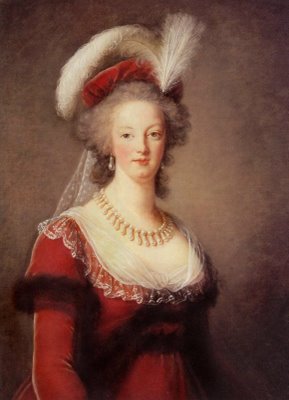
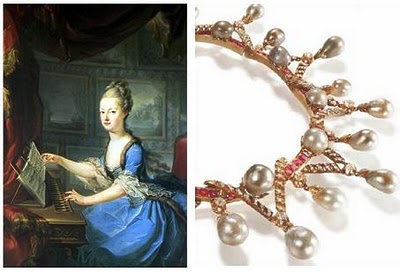
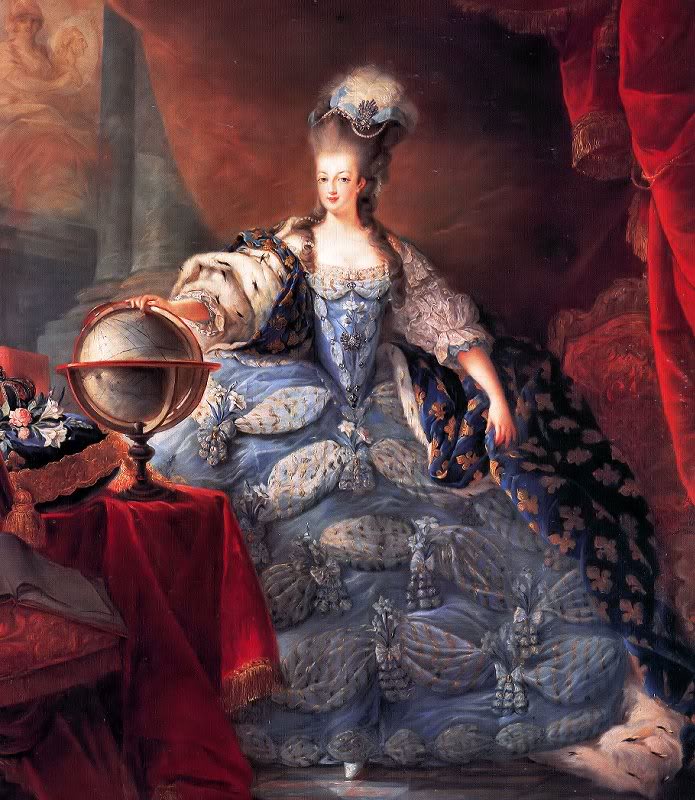
Today, we take a look at Marie Antoinette and some of her elaborate pieces, including her stunning pearl neckalce:
Once queen, she steadily ordered the newest looks from Rose Bertin, the leading Paris couturiere—among them the provocative “robe a la polonaise,” with its bosom-enhancing bodice and its billowy, ankle-baring skirts, the whole crowned by a “pouf,” a 3-foot mountain of powdered hair decked with plumes, veils, and other objects arranged as saucy references to current events. All this and more she wore at court and in town, with swiftly contagious effect; and Bertin became known as the Minister of Fashion.
Christie's employee Linda Pyke is dressed with a necklace, made of pearls belonging to Marie Antoinette, at Christie's Auction House in London September 27, 2007. The pearls once belonging to Antoinette and taken to Britain by a friend for safekeeping failed to find a buyer at auction on Wednesday. Credit: Reuters/Luke MacGregor
The history of the necklace:
Now part of a diamond, ruby and pearl necklace, France’s ill-fated queen gave a bag of pearls and diamonds to Lady Sutherland, the British ambassador’s wife, before she fled revolutionary France in 1792, a year before the monarch’s death.
Marie Antoinette, legendary for her extravagance, did not know her fate at the time and would have hoped to be reunited with her treasures one day, according to Christie’s officials.
Christie’s said Sutherland arranged for clothes and linen to be sent to the queen while she was in prison.
“This was reportedly the last gesture of kindness shown to the doomed queen,” the auctioneer said in a statement.
Marie Antoinette was executed by guillotine in October 1793.