Call for expert help (888) 724-8222

Jewelry Education and Advice

  • Best of Royal Russian Jewelry

    I happened upon this Best of Russia site yesterday and was bowled over by several of the pieces – such intricacy and beauty! Following is part history lesson and part dazzling royal Russian jewelry:

    In 1719, Emperor Peter I “the Great” (reigned 1682-1725), founded the earliest version of what we now know as the State Diamond Fund of the Russian Federation. Peter I had visited other European nations, and introduced many innovations to Russia, one of which was the creation of a permanent fund to house a collection of jewels which belonged not to the Romanov family, but to the Russian State.

    Peter declared that the state holdings were inviolate, and could not be altered, sold, or given away – and he also decreed that each subsequent Emperor or Empress should leave a certain number of pieces acquired during their reign to the State, for the permanent glory of the Russian Empire. Peter left all of the pieces used in the coronation ceremony to the Diamond Fund, as well as many important pieces of 15th, 16th and 17th century jewelry. The pieces were housed in a special secure room in the Winter Palace in St. Petersburg, first called the Renteria, and subsequently called the Diamond Chamber.

    Here is a sampling of some of these magnificent pieces:

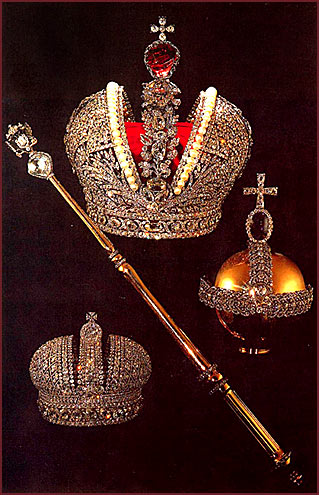
    (above) The Great Imperial Crown

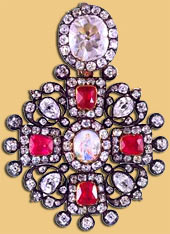
    (above) Imperial Diamond Tiara

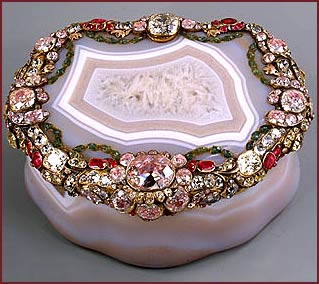
    (above) Faberge. Snuffbox, Circa 1765, Hermitage Museum

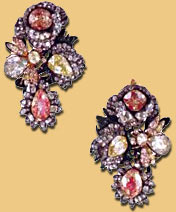
    (above) A gold-and silver-mounted diamond-set tiara, signed with initials KF for Carl Faberge

  • The Other Reasons for Jewelry

    We’ve often talked about this here before, so it was particularly refreshing finding an article about jewelry that serves other purposes than simply fashion. Since we’ve been in business 100 years, we understand intimately the connection between jewelry and tradition. My grandfather, father and I have seen pieces handed down, generation upon generation. Sometimes the pieces were kept exactly intact; others, alterations were made to fit the new wearer.

    Style? Of course. That’s always a key element of jewelry. But often, it signifies so much more!

    According to  Topix, here are some of the other reasons for jewelry:

    Tradition

    There are jeweleries that are typically worn because of tradition. Examples of these are rings. Throughout the years, rings have been used as a sign of being a married person. In fact, weddings will not be complete without this. In terms of tradition, there are also some jewelries that have been passed on from generation to generation as their heirloom. These heirlooms can be worn daily or just something they can keep and be passed for the next people who may receive it as a part their family tradition.

    Personal expression

    For many individuals, they would not only consider fashion as a way to express their personalities or preferences. Choosing good jewelery will already make a difference on how they look and be comfortable about themselves. For instance, some people who would like to wear vintage jewelries even not in a fashion sense. Some want to wear those that are Gothic in style to have that dark style suitable for their preferences especially if they’re into Goth music or punk style.

    Theme purpose

    There are scenarios where certain style will be useful for every individual particularly in themed parties. They just need to choose the costume they want to have and get the jewelry suitable for it. Royalty often possess large jewelry collections that will showcase their familial prominence not only in terms of money but also their social status.

    Without a doubt, jewelery will work perfect for every clothing especially when it comes to fashion but their uses are not only limited to this purpose. They can also use this for other purposes for important events or as a part of tradition.

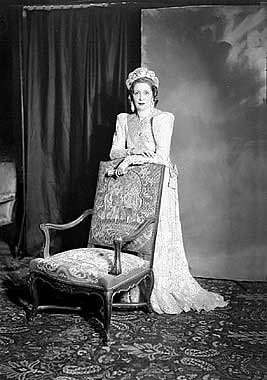
    Queen Nazli wearing her famous Jewels which she later had to sell in public auction to pay her and her daughter debts in L.A in 1970s.

  • Valentine’s Day Trivia

    A gift of love that MAY be out of your price range this Valentine's Day!

    It’s right around the corner. Valentine’s Day. It’s either a day you look forward to with baited breath or one where you’d like to bury your head in a heart-shaped candy box. But for right now – before we start making some suggestions – we wanted to take a strictly factual look at the day of hearts:

    15% of U.S. women send themselves flowers on Valentine’s Day.

    73% of people who buy flowers for Valentine’s Day are men, while only 27 percent are women.

    About 1 billion Valentine’s Day cards are exchanged each year. That’s the largest seasonal card-sending occasion of the year, next to Christmas.

    About 3% of pet owners will give Valentine’s Day gifts to their pets.

    Cupid, another symbol of Valentines Day, became associated with it because he was the son of Venus, the Roman god of love and beauty. Cupid often appears on Valentine cards holding a bow and arrows because he is believed to use magical arrows to inspire feelings of love.During the late 1800s, postage rates around the world dropped, and the obscene St. Valentine’s Day card became popular, despite the Victorian era being otherwise very prudish. As the numbers of racy valentines grew, several countries banned the practice of exchanging Valentine’s Days cards. During this period, Chicago’s post office rejected more than 25,000 cards on the grounds that they were so indecent, they were not fit to be carried through the U.S. mail.

    During the Middle Ages, the belief that birds chose their mates on St. Valentine’s Day led to the idea that boys and girls would do the same. Up through the early 1900s, the Ozark hill people in the eastern United States thought that birds and rabbits started mating on February 14, a day for them which was not only Valentine’s Day but Groundhog Day as well.

    February 14, 270 A.D. : Roman Emperor Claudius II, dubbed “Claudius the Cruel,” beheaded a priest named Valentine for performing marriage ceremonies. Claudius II had outlawed marriages when Roman men began refusing to go to war in order to stay with their wives.

    Hallmark has over 1330 different cards specifically for Valentine’s Day.

    Humorous valentines of the 19th century were called “Vinegar Valentines” or “Penny Dreadfuls.” Vinegar Valentines were introduced in 1858 by John McLaughin, a Scotsman with a New York City Publishing Business. Penny Dreadfuls with comic designs drawn in 1870 by American cartoonists Charles Howard became known as Penny Dreadfuls.

    In the Middle Ages, young men and women drew names from a bowl to see who their valentines would be. They would wear these names on their sleeves for one week. To wear your heart on your sleeve now means that it is easy for other people to know how you are feeling.

    In the United States, 64 percent of men do not make plans in advance for a romantic Valentine’s Day with their sweethearts.

    In Victorian times, it was considered bad luck to sign a Valentine’s Day card.

    In Wales, wooden love spoons were carved and given as gifts on February 14th. Hearts, keys and keyholes were favorite decorations on the spoons. The decoration meant, “You unlock my heart!”

    It wasn’t until 1537 that St. Valentine’s Day was declared an official holiday. England’s King Henry VIII declared February 14th a holiday.

    One single perfect red rose framed with baby’s breath is referred to by some florists as a “signature rose,” and is the preferred choice for many for giving on Valentine’s Day, anniversary, or birthday.

    Only the U.S., Canada, Mexico, France, Australia and the U.K. celebrate Valentine’s Day.

    Some people used to believe that if a woman saw a robin flying overhead on Valentine’s Day, it meant she would marry a sailor. If she saw a sparrow, she would marry a poor man and be very happy. If she saw a goldfinch, she would marry a millionaire.

    Teachers will receive the most Valentine’s Day cards, followed by children, mothers, wives, and then, sweethearts. Children ages 6 to 10 exchange more than 650 million Valentine’s cards with teachers, classmates, and family members.

    The 17th century hopeful maiden ate a hard-boiled egg and pinned five bay leaves to her pillow before going to sleep on Valentine’s eve. It was believed this would make her dream of her future husband.

    The first American publisher of valentines was printer and artist Esther Howland. During the 1870s, her elaborate lace cards were purchased by the wealthy, as they cost a minimum of 5 dollars – some sold for as much as 35 dollars. Mass production eventually brought prices down, and the affordable “penny valentine” became popular with the lower classes.

    The heart is the most common symbol of romantic love. Ancient cultures believed the human soul lived in the heart. Others thought it to be the source of emotion and intelligence. Some believed the heart embodied a man’s truth, strength and nobility. The heart may be associated with love because the ancient Greeks believed it was the target of Eros, known as Cupid to the Romans. Anyone shot in the heart by one of Cupid’s arrows would fall hopelessly in love. Because the heart is so closely linked to love, it’s red colour is thought to be the most romantic.

    The Italian city of Verona, where Shakespeare’s lovers Romeo and Juliet lived, receives about 1,000 letters addressed to Juliet every Valentine’s Day.

    The most fantastic gift of love is the Taj Mahal in India. It was built by Mughal Emperor Shahjahan as a memorial to his wife, who died in childbirth. Work on the Taj began in 1634 and continued for almost 22 years. required the labor of 20,000 workers from all over India and Central Asia.

    The oldest known Valentines were sent in 1415 A.D. by the Duke of Orleans to his French wife while he was imprisoned in the Tower of London. It is still on display in a museum in England.

    The red rose was the favorite flower of Venus, the Roman goddess of love. Red stands for strong feelings which is why a red rose is a flower of love.

    Valentine’s Day is big business. Consumers will spend an average of $77.43 on Valentine’s Day gifts this year. E-commerce retailers expect to rack up about $650 million in sales of food, candy, flowers, and other Valentine’s Day gifts. Of that amount about $350 million will be for gifts and flowers and another $45 million will be spent on food (including chocolate) and wine.

    Wearing a wedding ring on the fourth finger of the left hand dates back to ancient Egypt, where it was believed that the vein of love ran from this finger directly to the heart.

    A ring has been included in wedding ceremonies since the 12th century. Pope Innocent the Third ordained that marriages had to take place in church and that a wedding ring should be exchanged during the service.

    In England, the Romans, who had taken over the country, had introduced a pagan fertility festival held every February 14. After the Romans left England, nearly a century later, the pagan ritual was abolished by Pope Gelsius who established St. Valentine’s Day as a celebration of love in 496 A.D.

    In America, the pilgrims sent confections, such as sugar wafers, marzipan, sweetmeats and sugar plums, to their betrothed. Great value was placed on these gifts because they included what was then a rare commodity, sugar. After the late 1800’s, beet sugar became widely used and more available, and sweet gifts continued to be valued and enjoyed.

    Source: Brain Candy

  • The Difference between Freshwater and Saltwater Pearls

    Pearls will always remain a standard when it comes to jewelry choice. Every woman should own pearls as part of her jewelry warddrobe because it adds such a classic and stylish touch to just about any outfit.

    But how much do you know about pearls? And how do you choose the right kind of pearl for you?

    Read on:

    Freshwater pearls and saltwater pearls differ in the type of luster, first of all. In appearance, freshwater pearls are noted for a softer luster, a glow that comes from deep within the pearl. Saltwater pearls include Akoya pearls, which may be a similar size to freshwater pearls but have a more brilliant superficial luster.

    The difference is due to the type of mollusk used to produce the pearls and the thickness of the nacre. Freshwater pearls tend to have thicker nacre.

    Classification of Pearls:

    Pearls are classified in to two types:

    1)     Natural Pearls

    2)     Cultured Pearls

    1) Natural Pearls: The Natural Pearls are further classified in to
    two types:

    a)     Salt Water Pearls

    b)     Fresh Water Pearls

    Salt Water Pearls and the Fresh Water Pearls: Salt water pearls are
    mostly found oceans, gulfs, and bay areas. Fresh water
    pearls are found in the rivers and the lakes. These two types of pearls are
    produced under environmental and natural conditions.

    Nowadays the natural pearls are very rare because of air and water pollution. Natural pearls are very sensitive to the weather conditions, so the production of the pearls has
    fallen down. Because of less availability, natural pearls are very expensive. Natural pearls will have more thickness of nacre than the cultured pearls.

    Cultured Pearls: Cultured pearls are also similar to the natural pearls. There are salt water pearls and the fresh water pearls. An irritant is placed in the mollusk and it creates a pearl in response to it. The production of these pearls has increased to 95% all over the world.

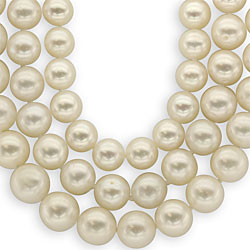
    Single Strand Cultured Freshwater Pearls - 8.5mm - 11.5mm With Free Matching Earrings Single strand cultured freshwater pearls, 17" with 14kt yellow gold clasp and free matching earrings. (each strand sold individually)

    Source: PearlDistributors.com

  • What IS Sterling Silver?

    I had a friend tell me at a party a few nights ago that she only wears silver.

    “You mean sterling silver?” I gently directed.

    “No. Silver. I don’t like the cheap stuff.”

    Well, I didn’t want to embarrass her but it got me thinking that it’s time to clarify a thing or two about sterling silver – what it is and what it isn’t.

    Pure silver is too soft for producing jewelry. It is alloyed with another metal to give it strength, generally copper, though other metals are often used as well, such as zinc, geranium and platinum. Sterling silver is made up of 92.5% mined silver and the rest, the chosen alloy. Tarnishing will occur in most sterling silvers because of the alloy ingredient, not because of the silver, which is non-reactive to oxygen.

    Sterling silver is marked with a universal stamp at a manufacturing company for authentication purposes (see above photo). It can then be molded into various final products, such as jewelry and flatware. Because sterling silver is an alloy, it can tarnish and needs to be cleaned with silver cleaner.

    Genuine silver is mined and comes from countries in South America such as Chile, Mexico and Peru. It can also be found in North America and across the US  (Michigan and Arizona).

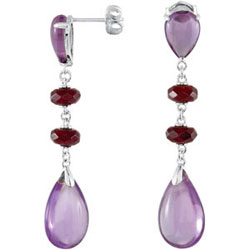
    Amethyst And Garnet Sterling Silver Dangle Earrings Sterling silver dangle earrings featuring genuine amethyst and Brazilian garnet stones.

  • The Symbolism of the Maltese Cross

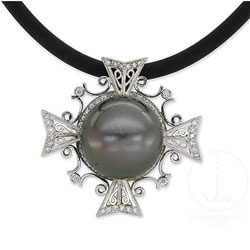
    (above) An original design by Joe Schubach. This solid 14kt white gold hand made, hand fabricated pendant features a 15mm natural gray Tahitian pearl along with 1/3ct total weight pave and bezel set natural diamonds. The piece hangs from a 16" black rubber cord with a 14kt white gold clasp.

    As we prepare for Valentine’s Day at our shop in Scottsdale, we began uncovering the meaning behind certain pieces of jewelry. Valentine’s Day is loaded with symbolism and often, it’s reflected in the jewelry: hearts, keys, circles, etc.

    Today, we wanted to share with you the information we found out about the Maltese Cross, inspiration for one of Joe’s most popular pieces (seen above):

    According to one website:

    The Maltese Cross is a symbol of protection and a badge of honor. Its story is hundreds of years old.

    When a courageous band of crusaders known as The Knights of St. John fought the Saracens for possession of the holy land, they encountered a new weapon unknown to European warriors. It was a simple, but horrible device of war. It brought excruciating pain and agonizing death upon the brave fighters for the cross.

    As the crusaders advanced on the walls of the city, they were struck by glass bombs containing naphtha. When they became saturated with the highly flammable liquid, the Saracens would hurl a flaming torch into their midst. Hundreds of the knights were burned alive; others risked their lives to save their brothers-in-arms from dying painful, fiery deaths.

    Thus, these men became our first Fire Fighters and the first of a long list of courageous men. Their heroic efforts were recognized by fellow crusaders who awarded each hero a badge of honor – a cross similar to the one fire fighters wear today. Since the Knights of St. John lived for close to four centuries on a little island in the Mediterranean Sea named Malta, the cross came to be known as the Maltese Cross.

    The eight points are said to symbolize the eight points of courage:

    • Loyalty
    • Piety
    • Generosity
    • Bravery
    • Glory and honor
    • Contempt of death
    • Helpfulness towards the poor and the sick
    • Respect for the church
  • A Quick Look at Jewelry from the 50’s

    Time for another jewelry lesson from Joseph Schubach Jewelers. Since we’ve been in existence for 100 years (you read that right), we’ve seen styles come and go. Interestingly, they always tend to come full circle and as the song goes, “Everything Old is New Again.” So what did the 1950’s offer in the jewelry department?

    1950’s

    Mid-century modernism influenced this period with the use of abstract sprays of diamonds in mixed cuts, starbursts and “atomic” shapes. Textured gold dominated this decade with Florentine finishes, foxtail chain, twisted rope, braided wire, mesh, reeding, fluting and piercing. Gold jewelry without gemstones was worn primarily in the daytime, with diamond jewelry for the evenings. Amethyst, turquoise, and coral were the favorite colored gemstones while cultured pearls were gaining acceptance into day wear.

    Source: Joden World Resources

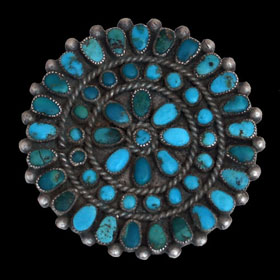
    (above) 1950s Handmade Sterling Silver & Natural Kingman Turquoise Brooch

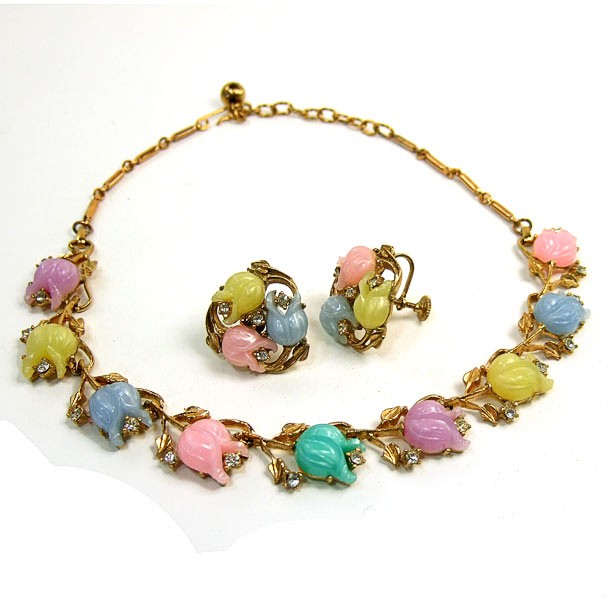
    (above) Demi Parure Set Thermoset Plastic Pastel Pink Blue Yellow Green Lavender Tulip Flower NECKLACE Screw Back EARRINGS with Clear Rhinestones and Gold Metal Leaf Chain

    (above) Vintage Sputnik Costume Jewelry

    (above) Strapless party dress with sparkling choker necklace and earrings

    (above) Pearls, pearls and more pearls

    (above) Our Classic Pearl Necklace, for under $300 - Single strand freshwater cultured pearls, 17" with 14kt yellow gold clasp. Click for more details.

  • The Best Ring for your Hand Type

    You might gaze longingly at an engagement ring in the window only to find that it’s not as picture perfect when you put it on. Just like clothing should be chosen based on your body type, rings should be purchased according to your hand type. Here are a few pointers:

    Long fingers — Marquise shapes often just make long fingers look even longer. The marquise is a stretched out oblong shape with pointed ends. Pear or oval stones may also not be very flattering on long fingers. Round rings are often the most flattering ring for this finger type.

    Marquise-shaped stone, good for short or wide fingers.

    Short fingers — Round stones can seem to shorten short fingers even further. The marquise shape can help add the illusion of length to short fingers. Pear or teardrop shapes are also usually flattering on short fingers. Big rectangular rings are probably the least flattering as they can overwhelm short fingers.

    Narrow fingers — Heart-shaped or round stones may not be the most flattering ring for a hand with narrow fingers. Thicker band styles of rings may help add horizontal lines to narrow fingers to help them look wider. Wearing rings with small stones may also help thinner fingers look wider.

    Wide fingers — Wider types of marquise styles may flatter short, wide fingers. The idea with wide fingers is not to have two much skin showing on each side of the ring or fingers may look even wider. Round stones in larger settings may look best on this finger type. Cluster-styles may be the most flattering ring on hands with wide fingers.

    Large hands — Rings with small stones may just look lost on large hands. Try larger rings that suit your personality. You may even be able to wear really bulky or chunky ring styles well.

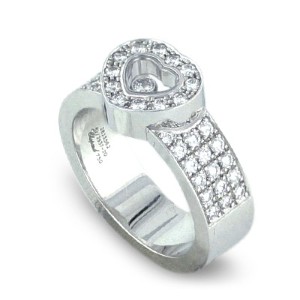
    Heart shaped stone for narrow fingers

  • Delicate Jewelry – from Streisand to Aniston

    A few months ago, Jennifer Aniston decided to pay homage to one of her favorite and funniest stars, Barbra Streisand. The shots are amazing but what impressed me was one particular shot that showcased Jennifer (and Babs) wearing a simple necklace, with multicolored rings hanging from it.

    For the last several seasons, we have been bombarded by statement necklaces – oversized, bold and occasionally bordering on the garish. It was refreshing to see a delicate piece that seemed to enhance, ever so slightly, an average gal’s outfit (though these ladies are far from average!)

    The necklace is Cartier’s Trinity necklace, which goes for about $1000. (We can make one for you at a fraction of the cost!) It features 3 intertwined circles of gold – each representing different stages in a relationship: yellow gold for friendship, pink gold for love and white gold for loyalty.

  • Chandalier Earrings – Maintaining its Trendy Lead

    Yesterday, I read about chandalier earrings and their continuing popularity over the last few years. It got me wondering about the history of chandelier earrings and sure enough, they’ve been around for quite some time. “Everything old is new again” continues to remain true. Chances are, there isn’t a piece of jewelry you possess that doesn’t have a story tell, sometimes reaching back many centuries.

    Here’s a little more on chandalier earrings:

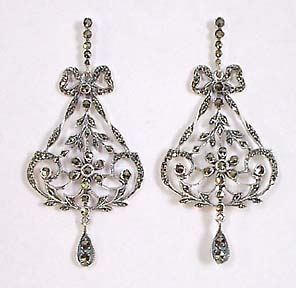
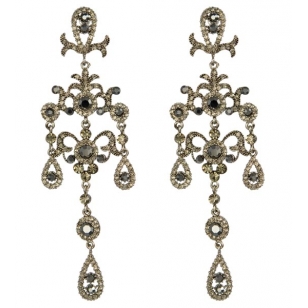
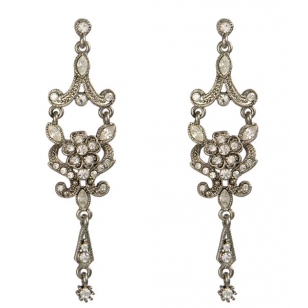
    Chandelier style, also known as girandole, are characterized by a bow, central stone or circular cluster of stones at the top from which are suspended three gemstone drops. The tops as well as the drops can be from simple to elaborate in execution. This style of earrings, and pendants, is first noted during Roman times, re-emerged during the Renaissance and persisted until the late Victorian period. With the revival of antique style jewelry in the late 20th and early 21st centuries many adaptations of the Chandelier earring are seen.

    Source: Antique Jewelry University

    Some examples (and remember, if any appeal to you, we’re happy to design a pair with your tastes in mind.)

    Cheryl Crow dons pink chandalier earrings