Rhodium, The World’s Rarest Metal

In my end is my beginning. ~ Mary Queen of Scots
Here at Joseph Schubach Jewelers, we consider ourselves educators of sorts. We want our customers to be as knowledgeable as possible, so their choices are sound and right. And the history of jewelry is no different; when you understand the past, you realize the power that it holds. A diamond ring is not just a diamond ring – its a symbol of love and strength that stretched back centuries:
Since at least 5000 BC, men and women have worn rings – on their thumbs, fingers and even toes.
Some rings have been purely decorative, seal rings and archers’ rings have had useful purposes, while a few have been thoroughly nasty specimens, harboring poison that turned a handshake into a deadly clasp.
The earliest written reference to rings as love tokens is in the second century BC, in works by the Roman playwright Plautus.
The practice of exchanging wedding rings, apparently common in Rome, was “Christianized” by the 4th century AD.
An early example of an engagement ring featuring Eros, the ancient symbol of love. By the 14th century, wealthy Europeans had their wedding rings set with precious jewels, somewhat like modern engagement rings, but it was not until 1477 that the diamond engagement ring as we know it came into being.
That year, the Hapsburg Emperor Maximilian I gave a diamond engagement ring to his fiancée, Mary of Burgundy. This first instance of a royal engagement ring fueled the European passion for diamonds, already aflame by the taste for fine jewels promoted by Mary’s father, Charles the Bold (1433–77).
As the dukes of Burgundy controlled Europe’s major diamond–cutting centers in Antwerp and Bruges, Charles’ encouragement of wealthy Europeans to buy diamonds appears to have a commercial side.
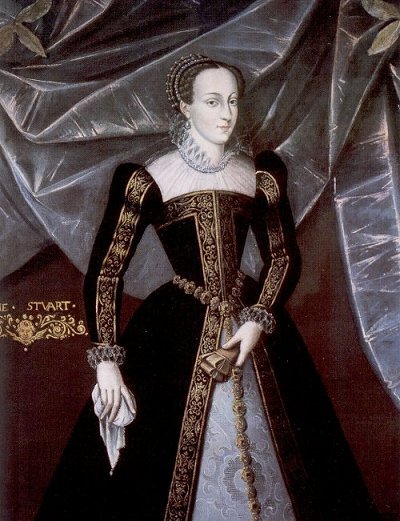
By the 16th century, it seemed no royal marriage was complete without a diamond ring. Mary, Queen of Scots, chose one when she married Lord Darnley in 1565 and in 1673, James II of England sent a diamond ring to Mary of Modena for their proxy wedding in 1673.
In 1839, Prince Albert gave Queen Victoria a diamond ring as a memento of their first meeting, perhaps inadvertently setting the royal seal of approval on diamond engagement rings.
It was during the second half of the 19th century that the practice of giving two rings for the bride became firmly established.
Prince Philip carried on the royal diamond tradition when he gave his fiancée, now Queen Elizabeth II, an engagement ring made with diamonds from the tiara of his mother, Princess Alice.
Source: Ancient Jewelry Facts
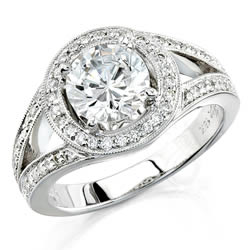
Style 9335M
Split Shank Milgrained Engagement Ring With Round Stones
Split shank milgrained engagement ring with approx. 1/3ct t.w. pave’ set side stones. Fits a 7mm round center stone. (Setting only, does not include center stone)
Just because gold is known for its high durability doesn’t mean that your gold jewelry doesn’t need some love and care. Here are a few pointers that will extend the life of your gold jewelry and keep you looking dazzling:
DOs
* Keep your jewelry away from chlorine as chlorine can weaken its structure and lead to breakage.
* Remove your jewelry and keep wrapped in a small soft cloth such as a chamois at the end of each day.
* Clean at least once a week with an appropriate cleaner, this will ensure that your jewelry keeps the shine and luster it had when first purchased.
* If you do not have a commercial cleaner a small amount of soapy water containing mild soap and a toothbrush will do just fine. Ensure that you leave your gold to air dry and then buff when drying is complete.
* Get them professionally cleaned at least once per year at a jeweler especially if they have precious stones embedded into them.
DON’Ts
* Wear your jewelry while swimming in chlorinated pools.
* Wear while bathing as soaps tend to leave a film on your gold rendering lusterless.
* Wear your gold jewelry all the time, this will add to wear and tear to it and cause it to be more vulnerable. Keep some pieces only for special occasions.
* Store jewelry in a place that it will rub on other jewelry or the storage container
Article Source: http://EzineArticles.com/?expert=Jayan_B
Style 7231WB
Ladies’ 14kt Yellow Gold Anniversary Band
Ladies’ anniversary band, .50ct t.w. channel set diamonds, 14kt yellow gold.
Metal: 14kt Yellow Gold
Stone Size: .50ct t.w.
Ring Size: 4 – 8
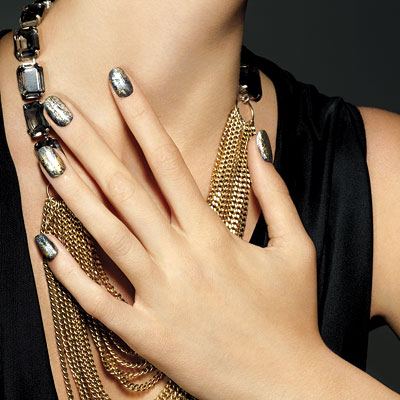
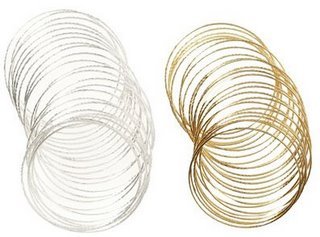
This is an often debated issue: if you’re wearing gold, where nothing but gold. If you’re wearing silver, where nothing but silver. That’s what my grandmother believed. She also believe eating candy before bedtime gave you nightmares. So maybe its time we revisit these old “rules of fashion.”
According to one expert:
We were once told not to mix metals, and this is one of the old-school rules (like no white after Labor Day) that designers now ignore. Wearing gold with gold and silver with silver creates a more traditional look, but isn’t true fashion all about looking modern?
The trick is, if you want to mix metals, keep the style of the jewelry the same. A modern gold cuff won’t look right paired back to dainty, antique platinum and diamond earrings. The “stacking trend” lends itself perfectly to the mixing of metals. Stack square or round rings or bangles in different shades of gold. You can even layer gold and silver necklaces for a fashion-forward look. Sometimes rules were made to be broken.
Hmmm…maybe candy before bedtime did cause nightmares.

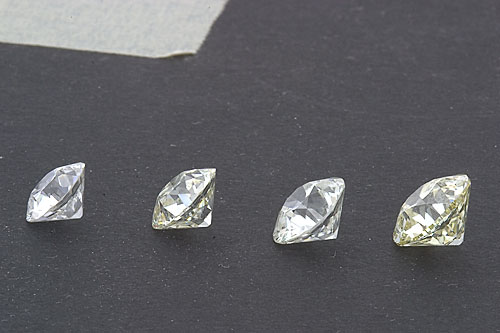

Ancient Egypt still influences our choice of fashion today, if you can believe it. Or perhaps you are already aware, since any of the images below are hardly foreign to our eyes. Cleopatra and her wondrous ways certainly had a direct influence. Kind of amazing to think of that kind of fashion lasting power!
And remember, we know our jewelry and our history – if there’s a piece that makes you feel like an Egyptian queen, let us create one for you.
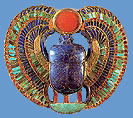
Jewelry was extremely popular throughout the history of the Egyptian nation. Excavations of tombs have shown that queens of Egypt were almost always buried with a multitude of jewelry to be used in the afterlife. The amount of jewelry worn by an individual often indicated their social position and level of wealth.
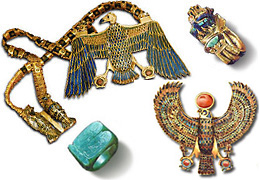
Even the poor, who could not afford much, attempted to adorn themselves with as much jewelry as was possible. While not nearly as expensive, the jewelry of the commoner was usually very brightly colored and was constructed of materials such as pottery.
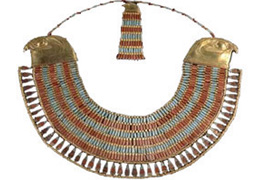
The Egyptians did not confine themselves to a limited selection of materials: a very wide variety of minerals were crafted into jewelry including amethyst, cornelian, jasper, onyx and quartz crystal. Today these stones are classified as semi-precious versus precious gems like diamonds, rubies, sapphires and emeralds.
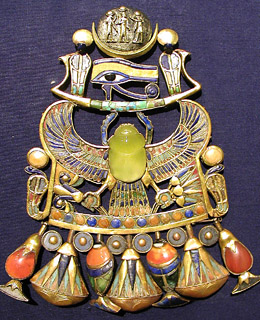
Tutanhkamun pendant (photo: J. Bodsworth)
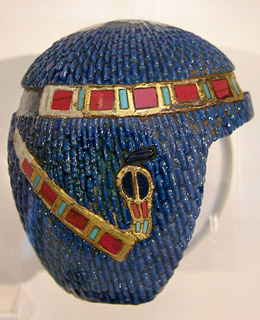
19th Dynasty inlaid diadem, or wig (J. Bodsworth)
Source: Ancient Egypt online

Many women face a problem when it comes to choosing wedding and engagements rings: they don’t like their hands.
“My fingers are short and stubby.”
“I don’t have time for manicures. My hands are a mess.”
“My hands are bony. A ring just accentuates it!”
We’ve heard it all here. But just like any other fashion choice, a properly chosen ring can enhance what you like about your hands and downplay what you don’t like.
According to this fashion expert Melanie Spark:
Rings can elongate your finger. If you choose a ring style that is longer than it is wide, it can actually make your fingers appear longer. If you have short fingers, perhaps you enjoy the look of an elongated and graceful hand.
The length of a ring is measured from top to bottom or, visually, as it would appear from knuckle to knuckle. The width of a ring is measured from side to side or, visually, as it appears horizontally while sitting on your finger.
See? There is hope for you and your hands. Here’s a simple, elegant engagement solitaire ring that we think works with most women’s hands, across the board:
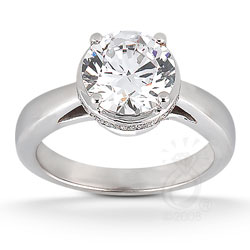
Style 9915-7.5mm
Four prong solitaire engagement ring with 1/10ct t.w. pave’ diamonds. Fits an 7.5mm round center stone. (setting only, does not include center stone)

What’s your totem animal? Are you stealthy and cat-like or more the lovable puppy? Perhaps you simply love frogs and they adorn your house (not the live kinds!)
Or you’re intrigued by any TV show featuring sharks. Or you’ve never gotten rid of that childhood love of dinosaurs.
Whatever your motif, we can create a piece of jewelry out of it. This has been done for centuries of course, and is tribal in origin. Some believe you are empowered by your totem animal or symbol and wearing it serves to strengthen you. Wear coins and bring money into your life. Wear sunshine and find your spirits lifting!
Here’s a little more on motif jewelry for 2010:
Don’t shy away from strong imagery this season.
Snakes, elephants, flowers, birds, and coins are some of the most popular motifs.
These elements add a very particular mood to a collection so find one that you like and then style it in a way that makes it your own.
Emphasize a motif by repeating it in many different ways.
For example: a necklace dripping with metal textured elephants, enamel elephants, carved wood elephants, and mixed with cords and chains can be a statement piece.
Applying chains in a snake-like pattern to a fabric frontal necklace can evoke the feeling of the snake without actually using the image.
Mixing and layering colorful flowers in fabrics, beads, and metals can create a romantic statement.
Here’s one of our motif pieces – The Key of Love pendant necklace. Who knows what doors you could open?
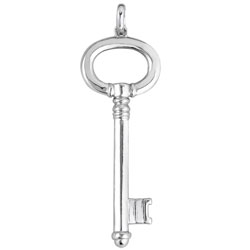
Style 10347
Thanks so much for the beautiful ring. My wife loves it. I just got back from England and now I am back in Kuwait where I am working for the rest of the year.
My brother in law picked me up at Gatwick Airport in England and hid me in the trunk of the car once we got close to my wife’s mothers house.
He had my wife retrieve a package from the trunk where I surprised her when she opened the trunk.
I gave her the ring and she loves it. She is not the flashy type but has been getting compliments for the past 2 weeks.
It is truly a beautiful ring.
Thanks again
J
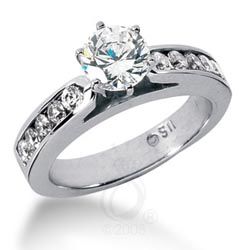
The Surprise Ring (except with a 3ct)!