Call for expert help (888) 724-8222

Jeweler News

  • The Manami Star, Named after Daughter

    Has anyone ever written a song for you? A poem? Certainly it must be a deeply flattering feeling. But what about having a massive gem named after you? Just ask Manami.

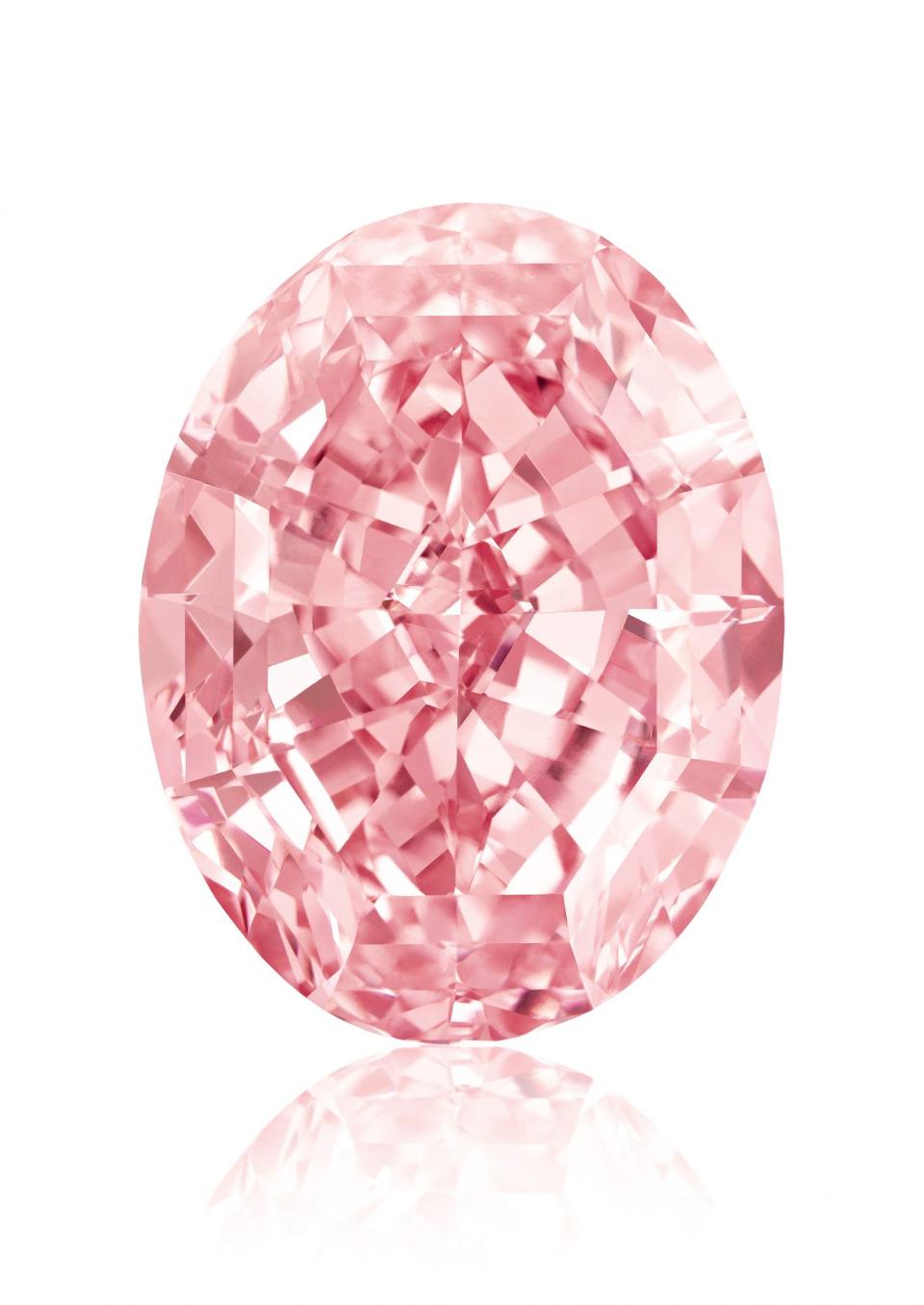
    Recently, Sotheby’s Hong Kong sold an 88.22 ct. D flawless oval for $13.8 million to a Japanese collector who named it Manami Star, after his oldest daughter.

    According to JCK:

    The sale of the egg-size stone was much anticipated. The auction house boasted that the diamond was “perfected by every critical criterion”—both externally and internally flawless and with excellent polish and symmetry. It is also type IIa—rare for a natural diamond.

    Patti Wong, chairman of Sotheby’s Asia, in a statement. “At 88.22 carats, this lucky stone now carries the name of the fortunate child whose father has chosen to give it her name. A happy moment in the journey of one of the earth’s greatest, oldest treasures.”

     

  • Gem Legacy – a Non-Profit Helping African Mining Communities

    Most don’t realize the many ways jewelers and gemologists give back to their communities. Take veteran gem cutter Roger Dery, for instance. His family has created a nonprofit org whose sole focus is helping to educate and provide vocational training to East African mining communities. The name of the nonprofit: Gem Legacy.

    According to JCK:

    Gem Legacy supports several initiatives, including those that increase educational opportunities in gemstone faceting, a trade that hasn’t flourished on the continent, but makes sense for it:

    “The employment is sorely needed and has the ability to transform families and communities,” said Dery in a prepared statement.

    The nonprofit has currently sets its eyes on a new goal: raising $9,500 to buy and install a used compressor for the Precious Women mine in Kenya, a mine run by local women, many widowed and in need of steady income.

    This amount raised by Gem Legacy will make the use of power tools possible (since the female workers currently mine with farming tools).

    Tsavorite garnets from the Precious Women mine in Kenya

    Tsavorite garnets from the Precious Women mine in Kenya

  • Marie’s Antoinette Pearl Breaks Records

    jewelry-worn-by-french-queen-marie-antoinette-including-the-news-photo-1051975070-1542305029

    A historically famous jewelry lover, Marie Antoinette wasn’t known for her ability to rule fairly but certainly yielded power when it came to what she wore. Even 200 years later, her fashion choices reign supreme.

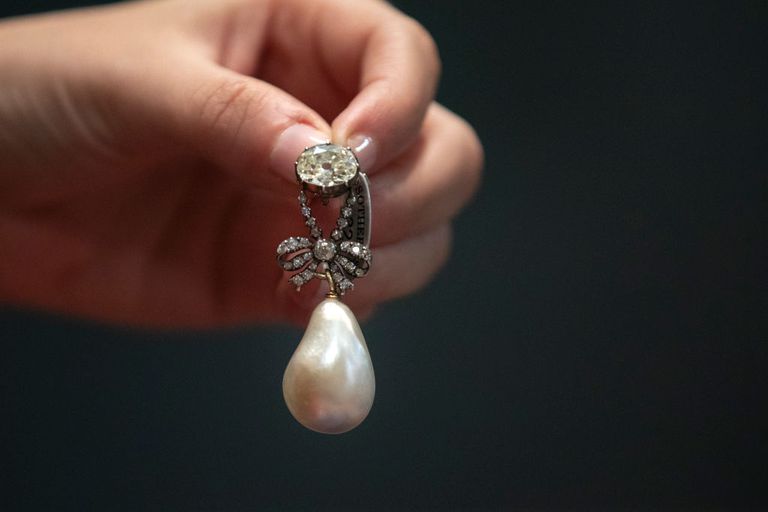
    A pearl and diamond pendant belonging to the French Queen Marie Antoinette has been sold for $36m in what Sotheby’s auction house is declaring a world record for a pearl.

    Says the BBC:

    It was part of a major collection of jewellery sold by Italy’s royal Bourbon-Parma house.

    Some of the jewels had not been seen in public for 200 years.

    The pendant more than tripled the previous world auction record for a pearl, which was held by a necklace that once belonged to Elizabeth Taylor.

    Additional auctioned items from this ill-fated Queen include a diamond necklace, a pair of pearl and diamond earrings as well as a monogram ring with a lock of her hair.

  • It’s Official: Lab Grown Diamonds ARE Diamonds!

    In exciting news for our industry, the FTC (Federal Trade Commission) has officially expanded its definition of “diamond” to include those grown in a laboratory:

    “When the commission first used the definition [of diamond] in 1956, there was only one type of diamond product on the market — natural stones mined from the earth. Since then, technological advances have made it possible to create diamonds in a laboratory. These stones have essentially the same optical, physical and chemical properties as mined diamonds. Thus, they are diamonds.”

    What does this mean for you, the consumer? This means you can be fully confident in this scientifically proven and legally sound fact:

    Laboratory-Grown Diamonds are Diamonds!

    According to Scottsdale, AZ custom jewelry store owner Joseph Schubach:

    Lab grown diamonds are identical to mined diamonds in every sense, chemically and optically. Currently, only the large labs such as the GIA and IGI have the equipment to determine whether a diamond is lab grown or mined, so even your local jeweler or gemologist won’t be able to distinguish between the two, except for a microscopic laser engraving identifying the diamond as lab grown.

    When it comes to the lab grown versus diamond battle, test yourself and you will see it is nearly impossible to tell the difference. To the naked eye it appears just as, if not even more, brilliant than it’s expensive natural counterpart.

    Dare to care by making your next custom jewelry design the perfect home for a lab grown diamond, knowing you’re contributing to a healthier ecology and a truly beautiful (and affordable) piece of jewelry.

  • Total Auction Sales for Jewelry, 2017

    The-Pink-Star-1200x1695

    2017 was quite a successful year for the big auction houses. Both Sotheby’s and Christie’s focused aggressively on fine jewelry sales…and the year-end numbers highlight how the dedicated work paid off.

    According to Forbes:

    The two auction houses combined for more than $1.1 billion in sales, with Christie’s achieving $556.7 million and Sotheby’s $551.3 million.

    Both auction houses expanded its jewelry offerings with an increased eCommerce presence and with special sales held throughout the year.

    And while Sotheby’s fell behind Christie’s in total jewelry auction sales, it did spearhead the sale of the world auction record for any gem or jewel: the CTF Pink Star. 

    The CTF Pink Star is a 59.60-carat internally flawless fancy vivid pink diamond which sold for more than $71.1 million ($1.19 million per carat) at Sotheby’s Hong Kong on April 4, 2017.

    Let’s see what surprises lie ahead for 2018!

  • People give jewelry to the Salvation Army, in lieu of cash

    120417-brooch-1280x720

    The red kettle of the Salvation Army has practically become synonymous with the holidays and a reminder that others are in need during this time of year. Though a recent trend shows that people aren’t just giving spare change. Some are donating expensive jewelry instead.

    According to WHDH:

    “A donor reached out,” said Salvation Army Director of Communications Drew Forster, “saying she wanted to donate a piece of jewelry. She was a little nervous that it was actually going to fit in the slot of our red kettle.”

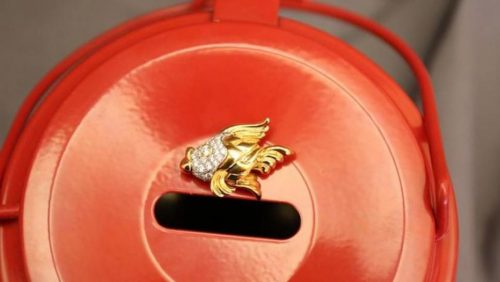
    The Salvation Army of Boston says that anonymous donor wanted to give a golden fish pin.

    The fish features 18-karat gold and 32 diamonds.

    When it was purchased nearly 20 years ago, it was valued at just under $5,000.

    It stands to reason that people would donate jewelry. Many of us have expensive pieces of jewelry occupying space in a dusty jewelry box when it could go to better use.

    So happy holidays and kudos to all you jewelry lovin’ charitable folks out there!


  • Bronze Age Grave Reveals Love of Jewelry

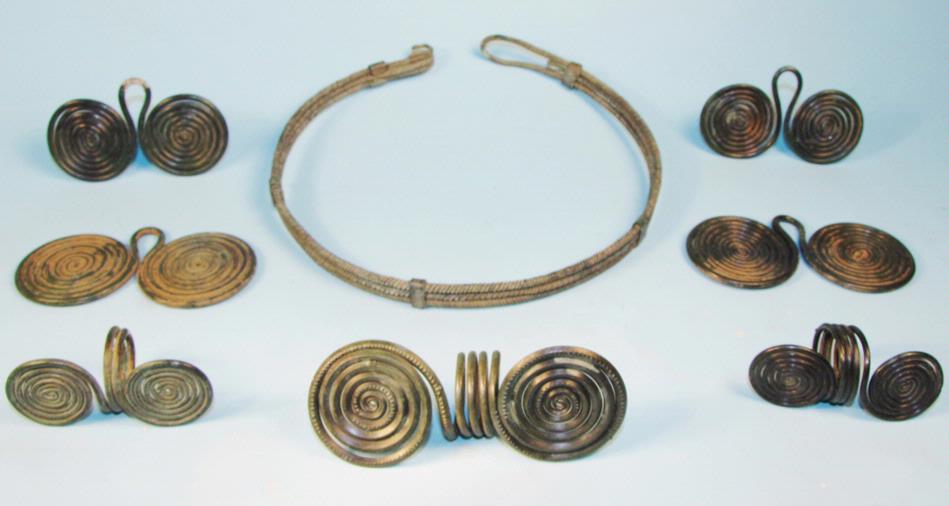
    Late Bronze Age European Spiral Torque and Ornaments group of jewelry.

    Late Bronze Age European Spiral Torque and Ornaments group of jewelry.

    Who doesn’t love jewelry? Throughout the history of humankind, bling in various forms have been adored, revered, passed on and taken to the graves.

    Most recently, archaeologists in southern Greece discovered an undisturbed tomb (approximately the size of a small house) which belonged to a Bronze Age nobleman with a penchant for jewelry.

    According to 1310 News:

    Greece’s Culture Ministry says the 3,350-year-old chamber near Orchomenos, an important centre of the Mycenaean era, belonged to a man who was 40 to 50 years old when he died.

    The nobleman’s tomb contained pottery vessels sheathed in tin, bronze horse bits, jewelry, bow fittings and arrowheads.

    The ministry says jewelry is more typically associated with the burials of Mycenaean women.

    So apparently, the man’s love of jewelry rivaled any Mycenaean women!


  • Costco’s Costly Tiffany’s “Mistake”

    In yet another story where a company purposefully misleads it customers, Costco’s was on the losing end of a gavel in a recent lawsuit and ordered to pay a cool $19.4 million for misleading consumers into thinking they could buy legit Tiffany bling.

    The mega-company’s defense, according to the New York Post?

    “Costco intended that the word Tiffany in its signs convey only that the rings had this style of setting — not that the rings were Tiffany & Co. brand rings,” the company said in a statement, adding “that was consistent with decades of dictionary definitions.

    Hmmm…”dictionary definitions”? Sounds fishy, for sure.

    The takeaway (as always) for jewelry purchasers everywhere: buyer beware. If a price sounds too good to be true, it probably is. Tiffany’s (in can be comfortably assumed) doesn’t sell their jewelry at “warehouse prices.” So as always, use a little common sense when investigating your next purchase.

    That doesn’t mean you can’t purchase a piece of jewelry that has similarities to a certain style you love. Custom design jewelry can do just that: combine elements of jewelry that has caught your eye and create a new piece, original in its origin and particular in its design. (We highly suggest that route!)

  • Plus-sized Jewelry Making a Splash

    When checking the jewelry trends on Twitter this am, our staff became intrigued by the latest news on plus-sized jewelry. According to Mic: 

    Plus-size clothing brand Universal Standard is launching a jewelry collection on Tuesday, July 11, Mic reports. The silver necklace, choker, bracelet, earrings, and rings are designed to fit around and lay elegantly on larger bodies.

    “The most basic problem [with mainstream jewelry] is just that it doesn’t fit,” Universal Standard co-founder and creative director Alexandra Waldman. “Regular jewelry isn’t made to scale. This is a line of jewelry that is meant to look native on a bigger body. The longer necklace falls exactly as it should on a longer body. The rings fit. The jointed choker always lays flat on the chest, and can be worn on a larger neck really beautifully.”

    And yes, we get this firsthand (though we certainly feel we have scaleable jewelry that works on all types of body). We strongly advocate a holistic  approach when it comes to wearing jewelry. That means taking into consideration (prior to purchase) body type, lifestyle, budget (of course) and personal taste (of course).

    Jewelry must feel like a natural extension of you, whatever your size!

  • Rockefeller Emerald to be Auctioned at Christie’s

    Screenshot-2017-05-31-12.54.54-600x543

    (Image: Christies)

    No matter what anyone says or does, my task is to be emerald, my color undiminished. – Marcus Aurelius

    What is it about the amazing gemstone emerald that makes us wonder how such a color is possible? Well, it must be something powerful because one emerald certainly has many locked in its hypnotic grip.

    According to JCK:

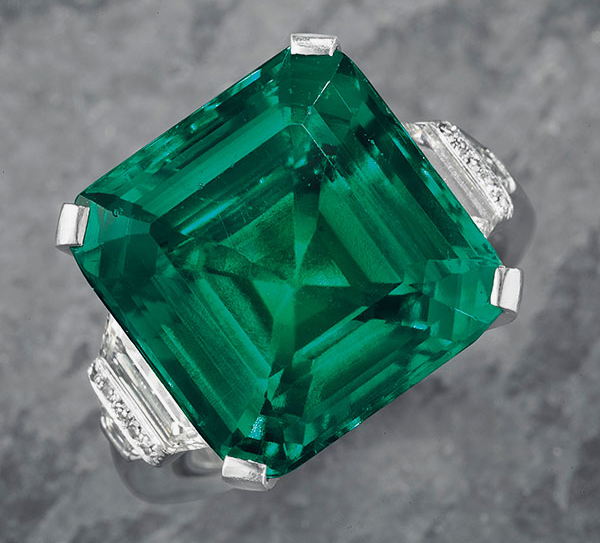
    The Rockefeller Emerald, an 18.04 ct. “exceptional” Colombian gem, will highlight Christie’s June 20 Magnificent Jewels sale in New York City.

    The step-cut stone, mounted with diamonds in a piece by designer Raymond C. Yard, is considered one of the finest emeralds ever to be auctioned. It carries a $4,000,000 to $6,000,000 estimate.

    American Gemological Laboratories describes the stone as “exceptional” with “an unusual combination of size, provenance, absence of treatment, and quality factors.”