Call for expert help (888) 724-8222

Jewelry Education and Advice

  • Upcycled Toolbox Holds Jewelry Beautifully

    Storing your jewelry is always a challenge. Jewelry boxes can encourage messiness (who hasn’t had to untangle necklaces) or simply forgetfulness (out of sight jewelry means out of mind). So when we stumbled across this article in the Star Telegram, we couldn’t help but notice not only how practical it is but how it’s an eco-friendly upcycling project that just about anyone can do (meaning you don’t have to be that crafty!).

  • Have you checked out Adam Says yet?

    Have you checked out Adam Says yet? He claims to be the perfect friend who will tell you the “real truth” about your fashion choices. Well, he’s a bit harsh…but definitely funny! Thanks to Oprah.com for this bit.

  • Little Known Facts about Gold and Silver


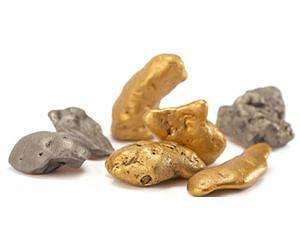
    gold-silver-nuggets-lg

    I’ll have to admit, many of our team members didn’t know these facts about gold and silver. Thanks to the people at FazeFive for schooling us! (Gold as “excrement of the gods?” Love it!)

    GOLD

    1. This metal has received the name “gold” for a good reason: the word comes from Old English and it means “ yellow” (and the Aztec word for gold, “teocuitatl” is translated by the Europeans as “excrement of the gods”; the Latin name is “aurum” which is “shining dawn” or “glow of sunrise”).
    2. Gold can be found on each of the 7 continents and 80% of it is still buried somewhere underground and 10 billion tons lays in the oceans. Until today, 161 000 tons of it has been mined, 73% of it has been extracted since 1910. And 2/3 of the world’s gold comes come from South Africa and India is the biggest consumer of gold today.
    3. Gold can be manufactured so thin that it appears transparent. It is used in some aircraft cockpit windows for de-icing or anti-icing by passing electricity through it. The heat produced by the resistance of the gold is enough to deter ice from forming.

    SILVER

    1. “Silver” refers to the .925 silver grade emerged in England, in the 13th century, but words for silver and money are the same in at least 14 languages. Silver was even mentioned in the Bible, its name comes from the Old English “seolfor”.
    2. Since 700 BC., silver has been coined over and over again: in 2003, in the United Kingdom, there were minted into coins and medals half a million ounces of silver.
    3. The largest producers of silver are Mexico, Chile and Peru. Over the years, silver jewellery has been associated with magical powers and people believed that silver can heal, bring good luck and ward the evil spirits away.
    4. Silver can be eaten (not advised) and it’s harder than gold.

    Read more fun facts about gold and silver.

  • May’s Birthstone – The Powerful, Radiant Emerald

    lab-grown-emerald


    What is it about an emerald that is so positively fetching and magical, as if snatched right out of a fairytale? Well, apparently it’s got a long history of power and wonder, as you’ll read below.

    If you’re looking for a custom designed piece using your birthstone (or you simply love emeralds), we’re happy to create something that marks your green gem love in the most special of ways.

    The emerald belongs to the beryl family of minerals that include aquamarine (one of March’s birthstones), heliodor, and morganite. Beryl, or beryllium aluminum silicate in chemical jargon, is a six-sided symmetrical crystal. Beryl contains beryllium, aluminum, silicon, and oxygen.

    Emeralds vary in color from light to deep green. It’s commonly thought that an emerald’s color derives from the presence of chromium and/or vanadium replacing some of the aluminum in the mineral’s structure. The stone can, however, lose its color when heated strongly.

    There are many myths associated with the emerald. The stone was once believed to prevent epilepsy, stop bleeding, cure dysentery and fever, and protect the wearer from panic. Its magnificent green color was said to rest and relieve the eye. To the ancient Romans, emeralds were dedicated to the goddess Venus because the green emerald symbolized the reproductive forces of nature. Early Christians saw it as a symbol of the resurrection of Christ. In the Middle Ages, emeralds were believed to hold the power to foretell the future.

    Source: EarthSky


    Image result for emeralds

  • How to Springclean your Closet (including your Jewelry Box)

    It’s that time of the year again where we box up the wintery wear and blow the dust off of lighter, prettier things. Even jewelry needs a spring-cleaning. It’s a perfect time to clean your jewelry as well as getting rid of old pieces that no longer serve you. Don’t be too dear. Think in terms of wardrobe that you simply couldn’t do without. The remainder? Take it to your local thrift store so someone else can enjoy it.

    Here’s some sage advice from Daily Mail:

    Choose an afternoon where you won’t be disturbed. Put on some music and wear nice underwear (you’re going to be looking at yourself in the mirror a lot) and comfortable clothes that are easy to take on and off.

    Start working your way through your wardrobe, trying on each item as you go. You want to create three piles of clothes: one pile for items you are throwing out/donating to charity/ friends, one for items that you are keeping and one for items you’re not sure about.

    Try on each item and ask yourself the following questions: does it suit you? Have you worn it at all in the last six months? Are you keeping it because it was expensive or a present? The only clothes you should keep are the ones that really suit you – be honest.

    Good reasons for throwing clothes out:

    • They are old and worn
    • They no longer fit you
    • You’ve never worn them
    • You don’t feel good in them

    Pack the pile of clothes you’re not sure about into a box and leave them for a month. If at the end of the month you haven’t missed them they can be given to charity.

    Personal heirlooms such as Grandma’s old shawl and clothes of other sentimental value should be boxed up with cedar blocks to keep the moths away and stored away from your wardrobe to give you more space.

    By the end of the afternoon you will find yourself with a much smaller wardrobe – now is the time to work out what’s missing.
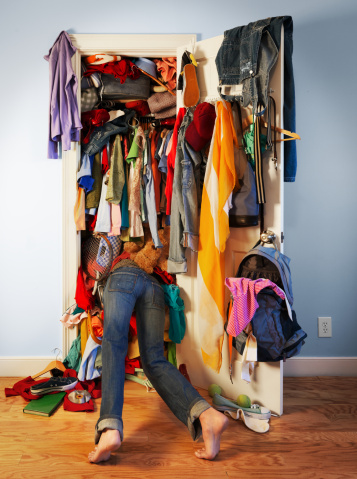
    Don’t be buried alive!

  • The Most Famous Red Diamonds

    Red diamonds are rare…very rare. These “gemologist’s dreams” range in shades of red but all are entirely amazing and captivating. Remember, in this day and age, you can have lab-created diamonds (including fancy colored) for a mere fraction of the price.


  • Jewelry that Fits your Particular Style

    Fashion expert Bobbie Thomas points out something we say almost daily around here: find jewelry that suits you. Statement necklaces might be hot but if it doesn’t work with your features, then they simply aren’t for you.

  • How to (Courageously) Wear Turquoise

    Turquoise has a bit of a dated stigma to it. Which is a shame because its a beautiful and adaptable stone, accenting a wide variety of clothes. Ready to rethink turquoise?


    https://www.youtube.com/watch?v=fBHheUckKQ0

  • Growing Lab Diamonds from Seeds

    We’re so happy to be working with Pure Grown Diamonds. We believe in their eco-friendly product and we love their team. Over the weekend, a customer asked how exactly a diamond is grown from a seed.

    Here’s what Pure Diamond has to say:

    Pure Grown Diamond technology replicates the conditions necessary to grow a diamond crystal above the Earth’s surface. Grown diamonds are produced by utilizing two gem-quality diamond creation processes: High Pressure-High Temperature (HPHT) and Chemical Vapor Deposition (CVD).

    In both instances a small diamond seed is placed in a tightly-controlled environment where the rough diamond grows, atom-by-atom, layer-by-layer, recreating the natural process.

    The CVD process replicates the crystallization of carbon over a diamond seed inside a vacuum chamber.

    Just as in nature, carbon crystallizes on the diamond crystal seed forming a tetrahedral structure identical to one formed below the surface of the Earth.

    The carbon atoms change from a gaseous state to a solid state becoming a single crystal that results in diamond formation. A rocky substance develops, waiting to reveal its gem.

    Like mined diamonds, grown diamonds emerge as rough. They are polished using the same equipment and techniques; producing the same brilliance, sparkle, fire and scintillation. The only difference is origin.

  • What to Look for When Digging Through a Box of Vintage Jewelry

    If you’re a thrift store shopper or an estate sale shopper, undoubtedly you’ve probably come across boxes or bags of jewelry, usually at a reasonable price. But what makes a vintage piece of jewelry worthy of taking home? What pieces might really be worth something? This woman is an expert on vintage jewelry and offers up a few tips: